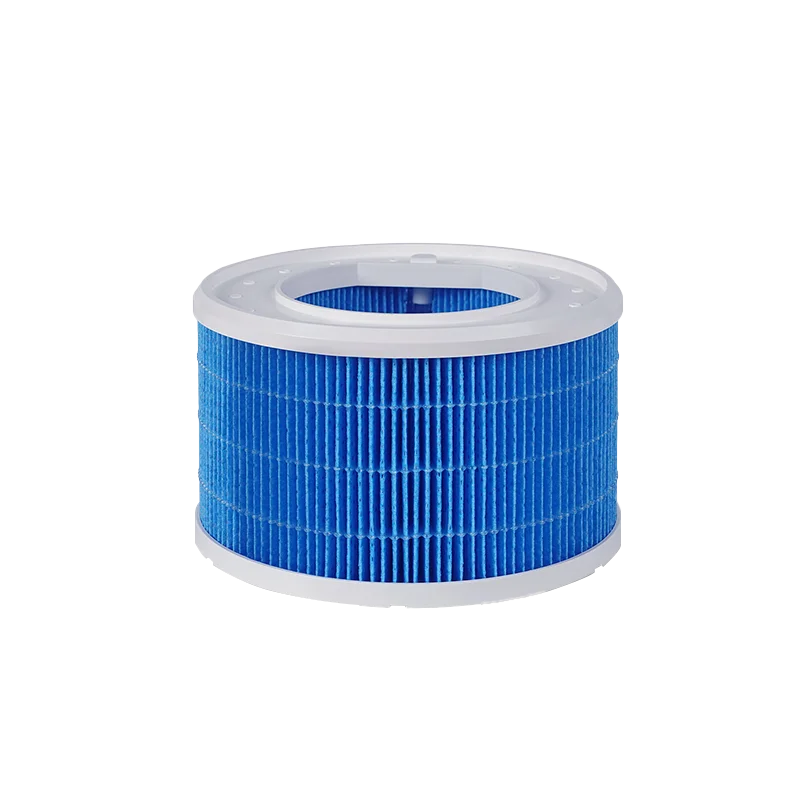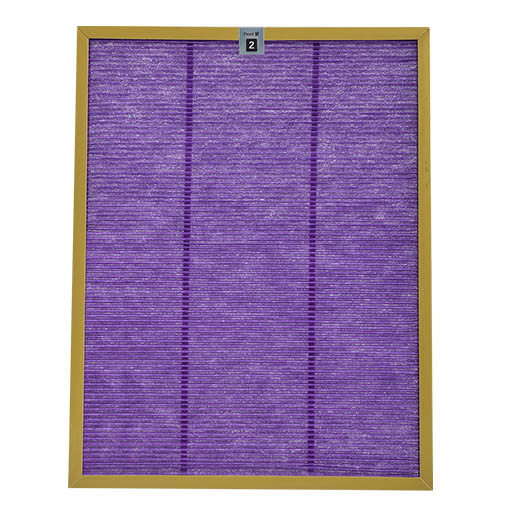
Filter media; biodegradable filter material; silk nanofibrillar aerogel (SNF)
Traditional PP meltblown filters are hard to degrade and cause secondary pollution; silk nanofibrillar aerogel (SNF) uses a 3D porous network to intercept PM0.3 at the nanoscale, combining low resistance with high throughput. Reinforced with chitosan for water resistance, it efficiently captures smoke and secondhand smoke, and more than 70% of it degrades after one year in landfill—aligning with carbon neutrality and fitting the circular economy. It is a green filtration material that bids farewell to petroleum-based filters.
A degradation rate above 70% vs traditional meltblown——LANSIR (Lanshan Environmental Technology) walks you through the underlying logic of next-generation filter materials!
This past midsummer, “good air” became the hottest check-in topic on social media. In July, Hubei recorded its best-ever air quality for the same period, with an average PM2.5 concentration of just 12.3 µg/m³ and an excellent-air-days ratio as high as 99.3%; from January to July, Hunan temporarily led the nation in PM2.5 improvement; and Chengdu frequently enjoyed crystal-clear blue skies where “you can see the snow mountains from your window.” Behind these inspiring numbers lies the solid progress of air-pollution prevention and control campaigns across the country.
Yet, while we keep applauding the blue skies outside, an easily overlooked question emerges: as outdoor air quality keeps improving, has our indoor breathing environment received equal attention? And, as practitioners in air purification, we should also ask: when we talk about high-efficiency filtration, are we ignoring the environmental cost of the filter media themselves?
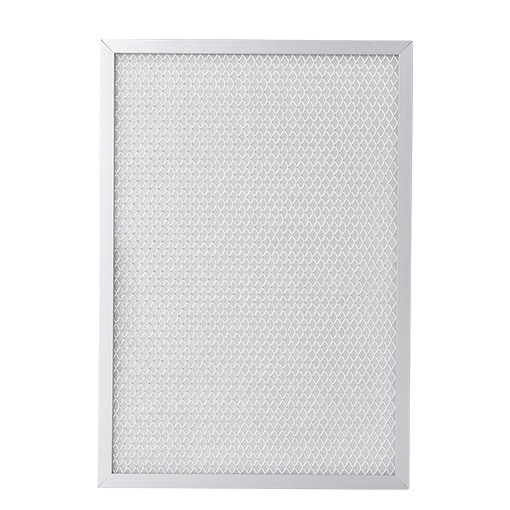
For a long time, the air-filtration market has been dominated by petroleum-based materials such as polypropylene (PP) meltblown nonwoven. They are cheap, but their non-degradability after “use-and-discard” creates a huge hidden risk of secondary pollution.
Notably, a breakthrough from the team at Wuhan Textile University—the silk nanofibrillar aerogel (SNF)—is offering a brand-new way of thinking about this industry pain point. Today, from a materials-science perspective, we take a deep look at this “black technology” that could trigger a revolution in filtration materials.
01. Structure Determines Performance: Why an “Aerogel”?
To understand the power of SNF, we must first understand its microstructure.
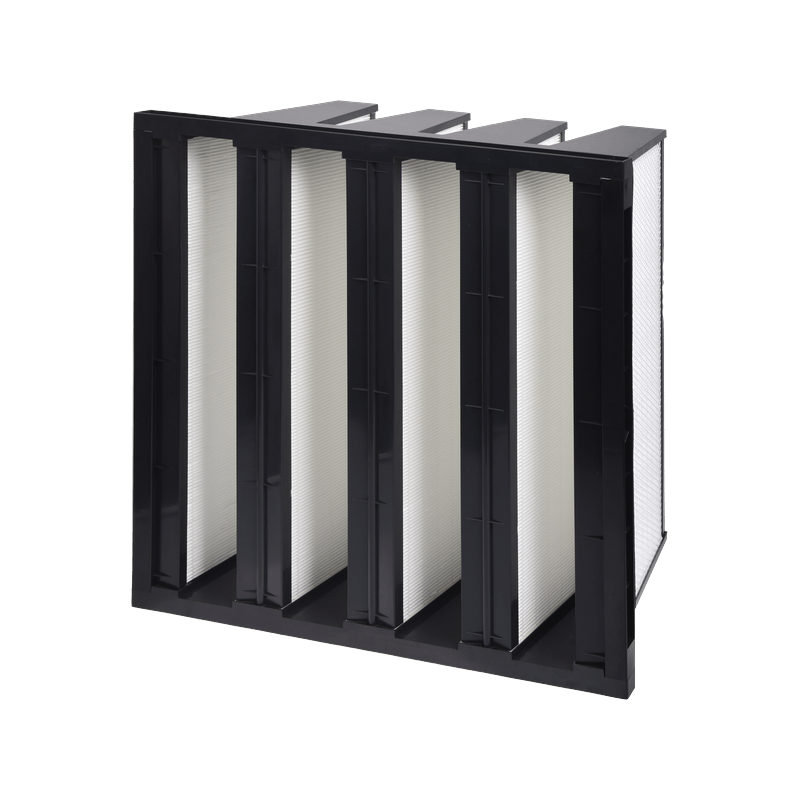
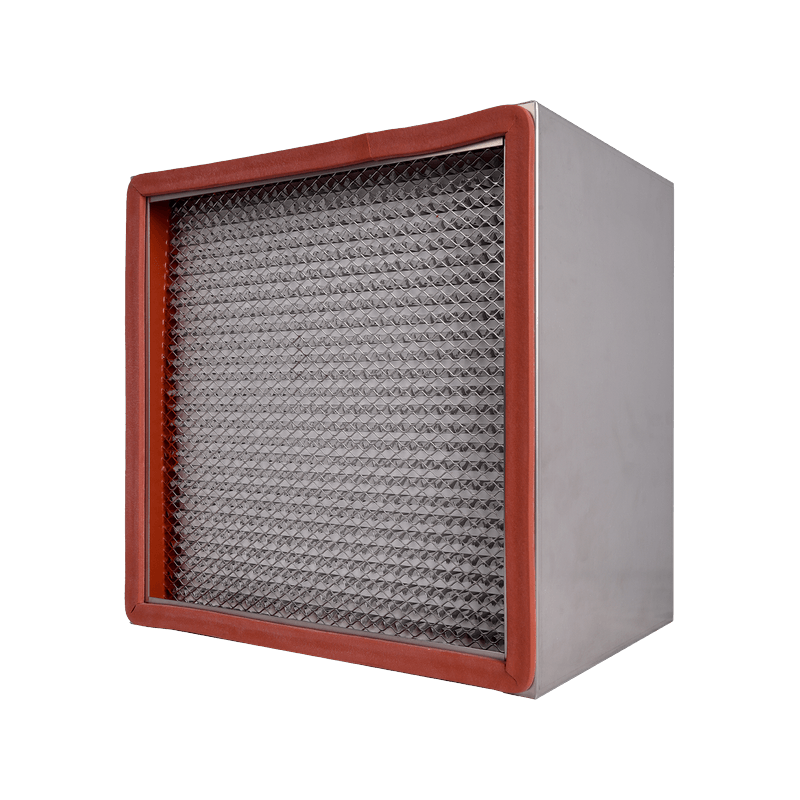
Traditional filter media often face a “Trade-off” dilemma: to raise filtration efficiency you must increase fiber density, but that drives air resistance up sharply and raises energy consumption.
SNF aerogel, through solvent-mediated ice-crystal growth, builds a unique three-dimensional porous network structure.
- Nanoscopic interception: The interior is woven from a great number of extremely fine nanofibers. By aerodynamic principles, such nanoscale fibers greatly increase the probability of collision with tiny particles, enabling precise capture of fine particulates such as PM0.3.
- Low resistance, high throughput: Its high porosity guarantees smooth air-flow channels—like countless highways opened through a dense forest: it blocks the dust without blocking the wind.
Even more surprising, by adding a small amount of chitosan (a natural polysaccharide), the research team successfully solved the usual weaknesses of aerogels—poor mechanical properties and low water resistance—so the structure stays stable under complex, variable real-world conditions.
02. Real-World Performance: A “Dimensional Reduction Strike” on PM0.3 and Smoke
On the core metrics of air filtration, SNF shows potential beyond traditional materials.
PM0.3 (particulates with an aerodynamic diameter of 0.3 µm) is hard to filter because it sits in the “most-penetrating particle size” (MPPS) range—too large to be caught by inertial impaction, yet too small to be caught efficiently by Brownian-motion diffusion.
However, the dense network formed by SNF’s nanofibers effectively fills this interception blind spot. Test data show that SNF aerogel achieves high-efficiency capture of both smoke from urban industrial emissions and common indoor secondhand-smoke particles. This means it can serve not only as an industrial protective material, but also, in future high-end household or in-vehicle purification, become a key component for improving air quality.
03. The Environmental Ledger: From “Centuries of Non-Decay” to “70% Degradation in One Year”
This is SNF aerogel’s most defining competitive edge, and the inevitable path for future materials science.
Consider a stark comparison:
- Traditional PP meltblown: As a petroleum-based plastic, it is extremely stable in nature; after one year in landfill it essentially does not degrade, occupying land long-term and generating microplastic pollution.
- SNF aerogel: Derived from natural silk protein, it has excellent biocompatibility. Data show that SNF waste, directly landfilled for one year, degrades at a rate above 70%.
This property perfectly fits the global strategic need for “carbon neutrality” and the circular economy. Using SNF means that, while we solve air pollution, we no longer do so at the cost of creating solid-waste pollution—truly achieving a dual closed loop of “purifying the air” and “protecting the planet.”
04. Conclusion
From the lab beaker to large-scale application, silk nanofibrillar aerogel demonstrates enormous commercial value and social significance.
As a brand that follows cutting-edge technology, LANSIR (Lanshan Environmental Technology) will keep tracking the industrialization of such green materials. We believe the air filter of the future must be not only an efficient “lung,” but also a “leaf” that can return to nature.
What do you think of this filtration “black technology” that is “taken from nature and returned to nature”? Welcome to share your thoughts in the comments section.