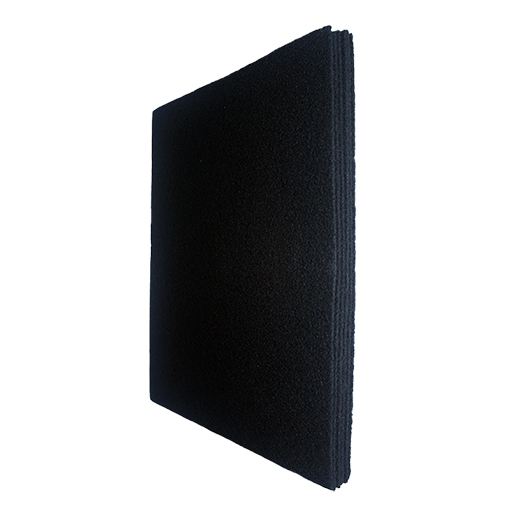
ISO 16890/ISO 16890-1/ePM/Coarse
ISO 16890 is the global unified test and rating standard for general-ventilation air filters, set by ISO. It replaced EN 779 in 2018. Its core classes use health-related particles—ePM1, ePM2.5 and ePM10. This closes the health gap left by the old standard and helps users select the right filter and enter global markets.
I. Background and Development History
1. Replacing the old standards
- Limitations of EN 779 and ASHRAE 52.2: The old standards rated filters by efficiency at a single particle size — EN 779 classified by efficiency at 0.4 µm — ignoring the multi-size distribution of real atmospheric dust. ASHRAE 52.2 emphasized particles larger than 3 µm, yet such particles account for only about 0.2% of total ambient particulate mass, so laboratory data diverged from real-world performance.
- Missing health linkage: The old standards did not relate to the health-hazardous particulates flagged by the WHO (e.g., PM1, PM2.5).
2. The need for global unification
- To resolve regional divergence (Europe’s EN 779, the USA’s ASHRAE 52.2, and mixed use in Asia), ISO 16890 was adopted by a global vote, helping to remove technical trade barriers.
II. Core Content and Technical Framework
ISO 16890 comprises four published parts; Part 5 (flat-sheet filter media) is still under development (ISO/AWI 16890-5).
1. ISO 16890-1 — Technical specification and classification system
- Classification basis: built around particulate-matter efficiency (ePM), grouping filters by performance against PM1 (≤1 µm), PM2.5 (≤2.5 µm), and PM10 (≤10 µm).
- Classification requirement: A filter must achieve an efficiency of at least 50% on at least one particulate group (ePM1, ePM2.5, or ePM10); otherwise it is classified as a coarse filter (ISO Coarse).
- Efficiency labeling: the measured efficiency is rounded to the nearest 5% (e.g., 62% is reported as ePM1 65%).
2. ISO 16890-2 — Fractional efficiency and airflow-resistance testing
- Test method:
- A test aerosol (such as DEHS) is used to simulate the 0.3–10 µm particle-size distribution, and the fractional counting efficiency is measured.
- The air-flow resistance is recorded simultaneously to evaluate the filter’s energy-consumption characteristics.
- Real-world simulation: a bimodal urban/rural dust-distribution model (combustion fine dust near 0.3 µm + soil/resuspension dust near 10 µm) is used to weight-calculate the ePM values.
3. ISO 16890-3 — Gravimetric Efficiency and Dust-Holding Capacity Testing
- Dust-holding capacity: the mass of a standard test dust (e.g., the synthetic dust used in legacy methods) captured is used to calculate gravimetric efficiency.
- Service-life prediction: analyze the effect of progressive dust loading on air-flow resistance, and develop a resistance–vs.–dust-holding-capacity curve.
4. ISO 16890-4 — Electrostatic discharge and minimum-efficiency determination
- Removing electrostatic interference: De-charge the filter (e.g., by isopropyl-alcohol immersion), then re-measure its efficiency to avoid falsely inflated results caused by electrostatic adsorption.
- Determining minimum efficiency: Take the average of the efficiencies measured in the virgin (original) and de-charged states to ensure the rated value is reliable.
Scope note: the standard applies to an airflow range of 0.25–1.5 m³/s on a standard 610 mm × 610 mm test rig; it does not cover HEPA/ULPA filters (governed by ISO 29463) or portable room air cleaners.
III. Classification System and Efficiency Evaluation
1. Four groups and their health relevance
| Group | Requirement | Health significance |
| ePM1 | ≥50% efficiency on PM1 | PM1 penetrates deep into the alveoli and enters the bloodstream, causing cardiopulmonary disease |
| ePM2.5 | ≥50% efficiency on PM2.5 | linked to asthma and lung cancer |
| ePM10 | ≥50% efficiency on PM10 | irritates the respiratory tract, aggravates allergies |
| Coarse | <50% for all three | intercepts only large particles (e.g., pollen, dust) |
Key points:
- Centrality of PM1: PM1 makes up over 90% of particle count in air; ≥60% efficiency is needed for effective health protection.
- User-friendliness: the public can combine local PM2.5/PM10 pollution data with a filter’s ePM rating to estimate its indoor-air cleaning effect.
2. Old vs new standard comparison
| Dimension | ISO 16890 | EN 779 / ASHRAE 52.2 |
| Core metric | ePM1 / ePM2.5 / ePM10 | 0.4 µm efficiency, or MERV rating |
| Test dust | multi-size distribution (urban/rural model) | single DEHS dust, or particles >3 µm |
| Health linkage | directly tied to WHO health indicators | no direct linkage |
| Real-world fit | bimodal curve simulates real atmospheric dust | single laboratory condition |
IV. Application Value and Industry Impact
1. For manufacturers
- Higher technical bar: optimize media (e.g., add micro-fiber layers) to boost PM1 capture and phase out low-efficiency electrostatic-cotton media.
- Global market access: unified certification (e.g., GSO ISO 16890-1) simplifies export procedures.
2. For users and designers
- Scientific selection: match the rating to the application (e.g., hospitals need ePM1 ≥80%, warehouses may use ePM10 50%).
- Energy optimization: use airflow-resistance data to choose low-resistance, high-efficiency products and cut operating cost.
3. For the industry ecosystem
- Weeding out inferior products: Coarse filters must be clearly labeled, curbing the circulation of cheap low-efficiency units.
- Driving innovation: spurring development of PM1-high-efficiency technologies such as nanofiber and composite media.
V. Implementation Challenges and Future Outlook
1. Challenges:
- Higher test cost: multi-size testing and de-charging procedures are complex; SMEs must upgrade their laboratories.
- Regional adaptation: the urban/rural dust model may need localization (e.g., higher PM10 weight in dusty/sandy regions).
2. Trends:
- Integration with IoT: real-time monitoring of a filter’s ePM drift enables smart replacement alerts.
- Extension to higher efficiencies: ISO/AWI 16890-5 (flat-sheet media testing) will bridge the gap from medium-efficiency to HEPA.
Application tip: pay equal attention to airflow-rate design when selecting a filter — even a high-efficiency filter cannot guarantee indoor air quality if the airflow is insufficient.
Centering on health-relevant particulates (PM1/PM2.5/PM10), ISO 16890 establishes a globally unified yardstick for air-filter performance through a four-dimensional test system (efficiency, resistance, dust holding, electrostatic discharge). Its innovations are:
- scientific grading — the ePM value points directly at health risk, pushing the industry to treat PM1 filtration as the technological high ground;
- true-to-life simulation — the bimodal dust-distribution model ends the pain of “lab data ≠ real-world effect”;
- global coordination — it replaces fragmented regional standards and provides a low-carbon, high-efficiency screening tool for building ventilation systems in the carbon-neutrality era.
As ISO/AWI 16890-5 advances (targeted around 2025), the standard will cover the full efficiency spectrum and reshape the technological paradigm of the air-filtration industry.