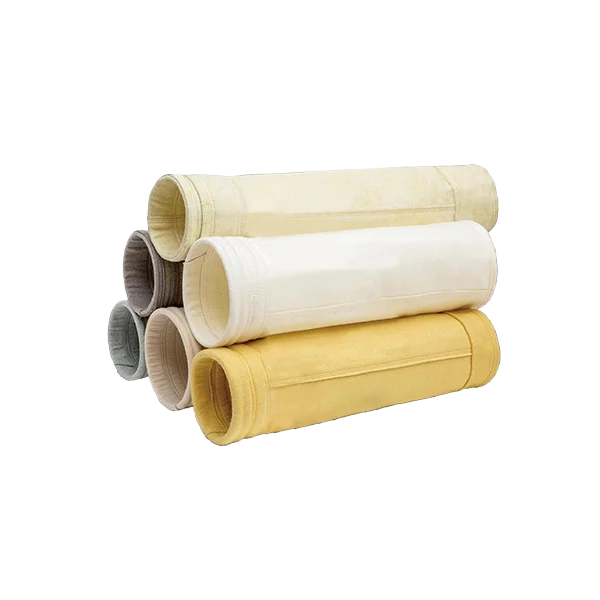
ASHRAE 52.2 · particle-size fractional efficiency · MERV rating · precise filter selection
A must-read for air-purification professionals: a full breakdown of the ASHRAE 52.2 air-filter performance-evaluation standard. It explains the KCl particle-size fractional-efficiency test, the MERV 1–20 rating and the MERV-A (electrostatic-decay) rating, the dust-loading procedure, and how it compares with ISO 16890 — to help you select the right filter with precision.
Ⅰ. Background and Evolution of the Standard
1. Objective
Published by ASHRAE (the American Society of Heating, Refrigerating and Air-Conditioning Engineers), the standard aims to unify how air-filter performance is evaluated and to overcome a key shortcoming of traditional overall efficiency tests — such as the gravimetric (arrestance) method and the dust-spot (atmospheric dust-spot) method — which cannot reflect a filter’s particle-size dependence.
- Traditional methods output only a single efficiency value (e.g., an average efficiency), ignoring how filtration varies across particle sizes.
- The new standard introduced the concept of particle-size fractional efficiency for the first time, making filter-performance evaluation more scientific.
2. Version evolution
- First edition (1999): established the core test framework and defined the MERV rating.
- Latest edition (ANSI/ASHRAE 52.2-2017): refined the test procedure and added the MERV-A rating (for electrostatic-decay / charged filters).
- Key revisions: standardized dust challenge, improved instrument accuracy, and an optimized dust-loading procedure.
Ⅱ. Detailed Explanation of the Core Test Method
1. Dust challenge and instruments
- Test aerosol: solid potassium chloride (KCl) particles, with a size range of 0.3–10 μm — covering the lung-deposited particle range. Rationale: KCl is non-toxic, dries easily, is low-cost, and its size distribution matches health-relevant particles.
- Measurement instrument: a laser particle counter that measures upstream and downstream concentrations across 12 particle-size channels.
2. Test procedure
- Initial-efficiency test: measured on each size channel with the filter in the clean state.
- Dust-loading test: ASHRAE synthetic dust (72% fine test dust + 23% powdered carbon + 5% milled cotton linters) is used to simulate real-world dust accumulation. Dust is injected in 6 incremental stages; after each stage reaches a predetermined resistance increment, efficiency is re-measured.
- Key outputs:
- Minimum composite efficiency: the lowest efficiency value for each size channel across the 6 tests.
- Final resistance: the resistance value corresponding to the dust-holding-capacity limit.
Ⅲ. The MERV Rating System
1. MERV calculation logic
- The 12 size channels are grouped into 3 bands (0.3–1.0 μm, 1.0–3.0 μm, 3.0–10.0 μm); the arithmetic mean of the minimum composite efficiency in each band gives E1, E2, E3.
- Against the standard’s Table 12-1, the MERV value (1–20) is determined from the E1/E2/E3 ranges.
2. MERV levels and typical applications
The table below summarizes the performance requirements and use cases of the key rating bands:
| MERV | 0.3–1.0 μm efficiency | 1–3 μm efficiency | 3–10 μm efficiency | Typical application |
| 1–4 | – | <20% | <70% | Residential window AC units; coarse pre-filtration |
| 5–8 | – | 20–35% | 70–85% | Commercial buildings; schools |
| 9–12 | – | 35–50% | 85–90% | Hospital labs; electronics plants |
| 13–16 | <75% | 50–75% | >90% | Operating rooms; pharmaceutical workshops |
| 17–20 | >75% | >95% | >98% | Approaches HEPA (99.97% @ 0.3 μm) |
💡 Note: Filters rated above MERV 16 approach HEPA performance, but HEPA still requires independent certification (e.g., per IEST-RP-CC001).
Ⅳ. Technical Features and Innovation Value
1. Core innovations
- Particle-size fractional efficiency: for the first time quantified a filter’s performance difference across particle sizes, closer to real-world protection needs.
- Minimum Efficiency Reporting Value (MERV): the dust-loading test captures the filter’s lowest performance over its service life, avoiding the inflated initial efficiency caused by electrostatic decay and similar effects.
2. Limitations and controversies
- Representativeness of the dust challenge: ASHRAE synthetic dust does not cover oily particles or microorganisms found in real environments.
- Destructive test: the dust-loading test runs to final resistance, so the sample cannot be reused.
- Electrostatic decay: the efficiency of charged media drops with use; the newer edition introduced the MERV-A rating (efficiency measured after real-world use).
Ⅴ. Application Scenarios and Implementation Notes
1. Industry applications
- Building ventilation: ASHRAE recommends MERV 13+ for hospitals and schools to control PM2.5.
- Data centers: MERV 9+ (40% dust-spot efficiency) is required to prevent particulate corrosion of equipment.
- Regulatory compliance: since July 2024, the U.S. state of California has mandated that air-filter products obtain a MERV rating by testing to ASHRAE 52.2.
2. Implementation risks
- Resistance matching: higher-MERV filters have larger pressure drop; evaluate fan capacity to avoid insufficient airflow.
- Sealing requirements: HEPA / MERV 16+ require dedicated sealed frames to prevent air bypass.
Ⅵ. Comparison with ISO 16890
| Dimension | ASHRAE 52.2 | ISO 16890 |
| Classification basis | Fixed size bands (0.3–1.0 / 1.0–3.0 / 3.0–10.0 μm) | Health-relevant particles (PM1, PM2.5, PM10) |
| Test dust | KCl aerosol + ASHRAE synthetic dust (loading) | DEHS droplets or equivalent aerosol |
| Output metric | MERV (single value) | Three efficiency values (ePM1 / ePM2.5 / ePM10) |
| Applicability | Mainstream in North America | EU and global trend (replaced EN 779 in 2018) |
| Health relevance | Indirect (size coverage) | Direct (targets harmful PM1 etc.) |
💡 Trend: because ISO 16890 is closer to the real-world health impact of ambient particles, it is spreading rapidly in non-U.S. markets; but ASHRAE 52.2 remains more detailed for technical performance comparison.
Through its particle-size fractional-efficiency test and MERV rating system, ASHRAE 52.2 overcame the limitations of traditional overall-efficiency methods and became one of the global benchmarks for filter-performance evaluation. Its core value lies in:
✅ Scientific comparability — a standardized dust challenge and test procedure that support cross-brand performance comparison;
✅ Life-cycle performance prediction — the dust-loading test reveals the lowest-efficiency point;
✅ Precise selection — the MERV rating clearly matches application needs.
As ISO 16890 spreads, the future may evolve toward standards with stronger health relevance, but ASHRAE 52.2 remains irreplaceable in its technical depth.